
by Aspirion | Mar 30, 2026 | Artificial Intelligence (AI), Denials Management, Revenue Cycle Management
Published by Becker’s Healthcare, March 2026 | Author: Aspirion The Real Source of Rising Denial Rates Despite investments in Clinical Documentation Improvement programs, clinical denial rates keep climbing—not because of documentation failures, but because...

by Aspirion | Mar 18, 2026 | Artificial Intelligence (AI), Payment Variance Recovery, Revenue Cycle Management, Zero-Balance Review
Hospitals spend enormous energy chasing high-dollar denials. It makes intuitive sense—focus where the money is biggest. But this approach leaves a significant and largely invisible problem unaddressed: the accumulating weight of smaller denied claims that never get...
by Aspirion | Mar 4, 2026 | Artificial Intelligence (AI), Payment Variance Recovery, Revenue Cycle Management, Zero-Balance Review
Hospitals operate on razor-thin margins. For some health systems across the country, net margins hover below 5%—meaning every dollar of revenue carries significant weight. So when industry data suggests that a structured zero-balance review program can recover up...

by Aspirion | Feb 4, 2026 | Artificial Intelligence (AI), Denials Management, Revenue Cycle Management
If you ask many revenue cycle leaders what is driving denials, most will point to the usual suspects: coding errors, eligibility mix-ups, missing documentation. And they are not wrong—those issues are real, persistent, and costly. But they are not the whole story. A...
by Aspirion | Jan 28, 2026 | Artificial Intelligence (AI), Denials Management
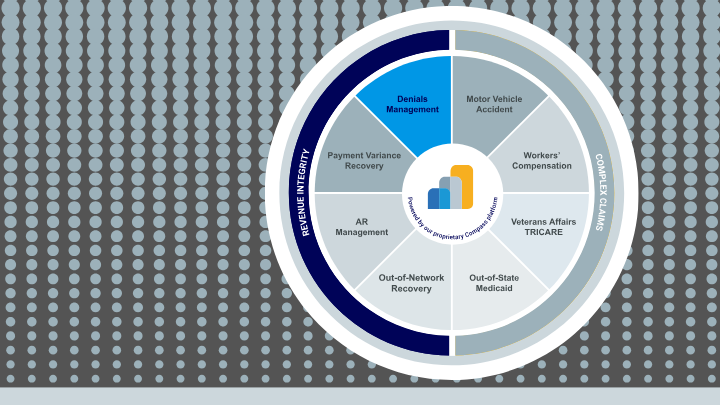
Revenue Integrity DocIQ The AI Powering Our Denials Management Services Download Service Summary Aspirion's Services Meet DocIQ Payers accelerate denials with AI. Limited staff can’t keep pace—millions in revenue go unpursued. The solution. Our Denials...

by Aspirion | Jan 28, 2026 | Artificial Intelligence (AI), Payment Variance Recovery, Revenue Cycle Management, Zero-Balance Review
Healthcare providers face a stark reality: they’re chronically underpaid. It’s not an accident—it’s a feature of an impossibly complex system where payers have little incentive to pay correctly, contracts are deliberately indecipherable, and the...
